Usage Guide
What to expect from laser treatment.
01
Pre-Treatment Preparation
Shave the treatment area 24 hours before your session — the laser targets the follicle beneath the skin, not surface hair. Avoid waxing, plucking, or threading for 4-6 weeks prior, as these remove the hair root the laser needs to target.
02
Skin Assessment
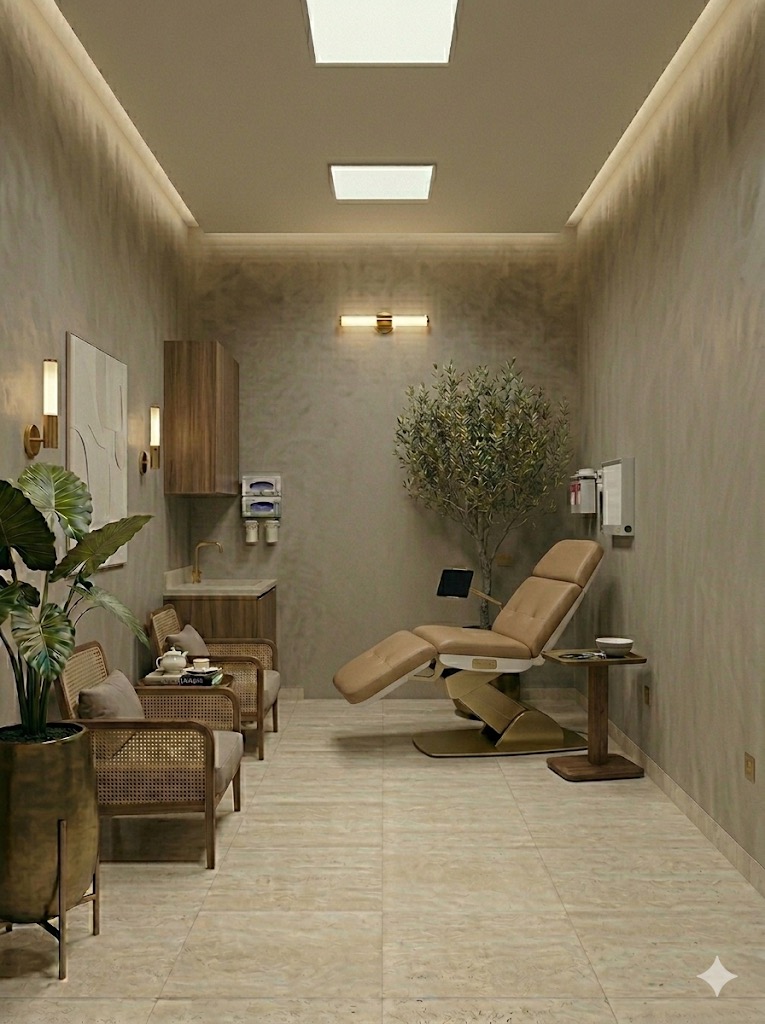
Your aesthetician will assess your skin type, hair color, and treatment area to select the optimal laser wavelength and settings. A test patch may be performed on your first visit to calibrate energy levels for your skin.
03
The Treatment
The laser handpiece is pressed against the skin and activated. You'll feel a sensation often described as a warm snap — most patients find it very tolerable. Integrated cooling systems protect the skin surface during treatment.
04
Immediate Aftercare
Mild redness and slight swelling around the follicles (perifollicular edema) are normal and typically resolve within a few hours. Apply aloe vera or a soothing gel as directed. Avoid sun exposure and apply SPF 30+ for 2 weeks.
05
Treatment Series
Hair grows in cycles, and the laser is most effective during the active growth phase (anagen). A series of 6-8 sessions spaced 4-8 weeks apart ensures all follicles are targeted across their growth cycles for maximum reduction.
Pro Tips
- Avoid sun exposure and tanning for 2-4 weeks before and after treatment
- Discontinue self-tanning products at least 2 weeks before your session
- Treated hair will shed gradually over 1-3 weeks — this is normal, not regrowth
- Body areas (legs, back) typically show the greatest long-term reduction
- Facial hair may require more sessions due to hormonal influence on follicle cycling
- Avoid hot baths, saunas, and intense exercise for 24 hours post-treatment
- Your ALYZE aesthetician will customize wavelength and energy settings for your skin type
Important: Laser hair removal is not recommended for individuals with active skin infections, open wounds, or tattoos in the treatment area. Certain medications (photosensitizing drugs, isotretinoin) may contraindicate treatment — inform your aesthetician of all medications. Laser is most effective on dark hair; very light blonde, red, gray, or white hair may not respond well. Pregnant individuals should postpone treatment.