Somewhere around your mid-thirties, a quiet biological shift begins. Your body starts losing muscle mass at a rate of roughly three to five percent per decade — a process called sarcopenia. You probably won't notice it at first. Maybe your grip feels slightly weaker, or you're a bit more sore after a weekend hike than you used to be. But left unaddressed, this slow erosion of lean tissue becomes one of the most consequential health risks of aging.
Sarcopenia doesn't just affect how you look. It affects metabolic rate, insulin sensitivity, bone density, balance, and ultimately, independence. A landmark study published in The BMJ found that grip strength — a reliable proxy for total-body muscle mass — is a stronger predictor of all-cause mortality than blood pressure. That's a striking finding, and it reframes how we should think about exercise after 40.
This is not an argument against cardiovascular exercise. Cardio is essential for heart health, VO2 max, and metabolic function. But here's the reality: most people over 40 default to walking, running, or cycling because it feels accessible and familiar — while neglecting the one modality that directly counteracts the primary physical consequence of aging.
Resistance training is the only reliable way to build and maintain skeletal muscle. And skeletal muscle is not just tissue that helps you lift things. It's an endocrine organ. It secretes myokines — signaling molecules that reduce inflammation, improve glucose metabolism, support brain health, and enhance immune function. When you lose muscle, you lose these protective signals too.
Muscle is not vanity. It's a metabolic organ, an endocrine organ, and arguably the single most important tissue for healthy aging. Training it is not optional after 40 — it's essential.
Your body at 45 is not your body at 25, and training as if nothing has changed is a recipe for injury and frustration. Here's what actually shifts:
What doesn't change: your muscles still respond to progressive overload. The fundamental stimulus for hypertrophy is the same at 50 as it is at 20. You just need to be smarter about how you deliver it.
Based on current evidence, here's what an effective strength training program looks like for adults over 40:
This gives you enough training volume to stimulate growth while allowing adequate recovery between sessions. Full-body or upper/lower splits tend to work better than traditional bodybuilding splits at this age because they allow you to train each muscle group more frequently with moderate volume.
Squats, deadlifts, presses, rows, and carries should form the backbone of your program. These multi-joint movements recruit more muscle, produce a stronger hormonal response, and develop functional strength that translates directly to daily life. Isolation exercises have their place — but they should supplement, not replace, the big lifts.
You can still add weight to the bar — just expect progress to come in smaller increments. Adding five pounds to your squat every month is still meaningful progress. The key is consistency over years, not intensity over weeks.
Fast-twitch muscle fibers atrophy faster than slow-twitch fibers with age. Including medicine ball throws, kettlebell swings, or explosive step-ups helps preserve the neuromuscular qualities that prevent falls and maintain athletic capacity.
A thorough warm-up isn't a luxury anymore — it's a prerequisite. Spend 10 to 15 minutes preparing your joints and activating the muscles you're about to train. This isn't just injury prevention; it's performance optimization.
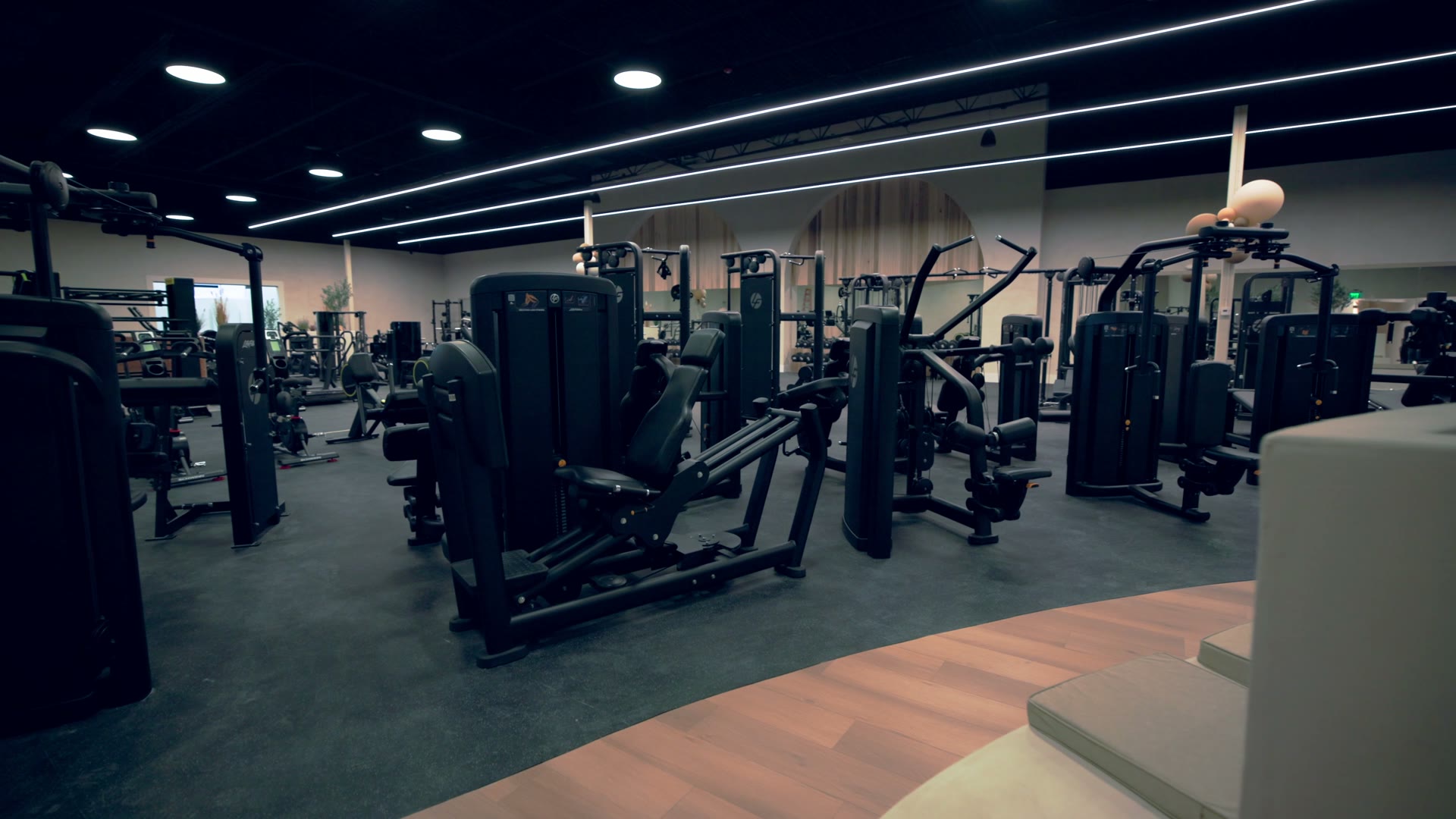
One of the most significant advantages of training in a facility like ALYZE is access to objective data. A DEXA scan can tell you exactly how much lean mass you carry, where you carry it, and whether you're gaining or losing it over time. This removes guesswork entirely.
Bloodwork reveals your hormonal landscape — testosterone, estradiol, IGF-1, thyroid markers — all of which directly influence your capacity to build and maintain muscle. If your testosterone is clinically low, no training program in the world will produce optimal results until that's addressed.
VO2 max testing establishes your cardiovascular baseline and helps you structure conditioning work without cutting into your recovery capacity for strength training. And body composition tracking over months tells you whether your program is actually working — not based on how you look in the mirror, but based on measurable changes in tissue.
Training is the stimulus. Nutrition is the substrate. After 40, the margin for error on protein intake narrows considerably. Most adults over 40 should aim for 1.0 to 1.2 grams of protein per pound of lean body mass, distributed across at least three meals per day, with each meal containing 30 to 40 grams of high-quality protein.
Leucine — the amino acid most responsible for triggering muscle protein synthesis — becomes particularly important. Animal proteins (meat, fish, eggs, dairy) are naturally rich in leucine. If you eat a plant-based diet, supplementing with leucine may be worth discussing with your practitioner.
Here's what's genuinely encouraging: muscle responds to training at any age. Studies on adults in their 70s and 80s consistently demonstrate significant strength and muscle mass gains from resistance training programs. If you're starting at 40 or 50, you have decades of potential adaptation ahead of you.
The members who achieve the most at ALYZE are not the ones who train the hardest in any given week. They're the ones who train consistently, recover intelligently, track their progress with real data, and adjust their approach based on what their body is actually telling them — not what a generic program prescribes.
Strength training after 40 is not about recapturing your twenties. It's about building the physical foundation for the decades ahead. And when it's done within a system that includes your bloodwork, your hormones, your recovery, and your nutrition, the results compound in ways that isolated training simply cannot match.
Bountiful, Utah · alyze.health
