Laser hair removal has become one of the most popular aesthetic treatments in the world, and for good reason. It offers something that shaving, waxing, and depilatory creams simply cannot: permanent hair reduction. But despite its popularity, there is still a surprising amount of confusion about how it works, who it works for, and what the experience actually involves.
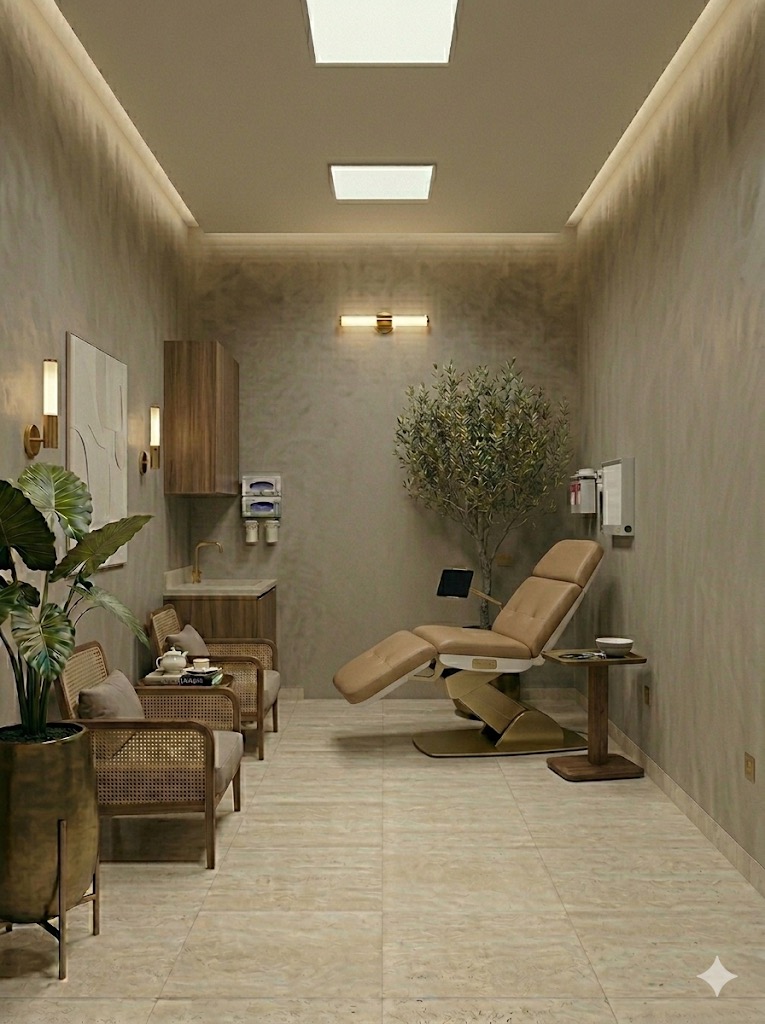
This guide covers the science behind the treatment, addresses the most common questions we hear, and explains what a session looks like when it is done right — in a premium clinical environment designed for both results and comfort.
The principle behind laser hair removal is selective photothermolysis. A concentrated beam of light targets melanin — the pigment in your hair follicle — and converts that light energy into heat. That heat damages the follicle's ability to produce new hair without affecting the surrounding skin.
The key word here is selective. Modern laser systems are engineered to distinguish between the pigment in your hair and the pigment in your skin. This is why the technology has advanced so dramatically over the past decade: newer diode and alexandrite lasers can safely and effectively treat a much wider range of skin tones than earlier systems could.
Your hair grows in three phases: anagen (active growth), catagen (transition), and telogen (resting). Laser treatment is only effective during the anagen phase, when the hair is actively connected to the follicle and contains the most melanin. Because only about 20 to 30 percent of your hair is in anagen at any given time, multiple sessions are necessary to catch each follicle during its active phase.
This is why a single session, no matter how powerful the laser, will never deliver complete results. It is biology, not technology, that dictates the treatment timeline.
Permanent hair reduction is not a single event — it is a process that works with your body's natural growth cycles, not against them.
Most areas require six to eight sessions spaced four to eight weeks apart, depending on the treatment zone and your individual hair growth patterns. Finer hair may require more sessions; coarser, darker hair often responds faster.
After completing a full treatment course, most patients experience 80 to 90 percent permanent hair reduction. Some may need occasional maintenance sessions — once or twice a year — to address any dormant follicles that become active later.
The honest answer: it depends on the area and your individual sensitivity. Most patients describe the sensation as a quick snap — similar to a rubber band flicking against the skin. Modern laser systems incorporate built-in cooling mechanisms (either cryogen spray or sapphire contact tips) that numb the skin immediately before and after each pulse.
Compared to waxing, most patients find laser treatment significantly less painful. And unlike waxing, each subsequent session tends to be less uncomfortable than the last, because there is progressively less hair to target.
The ideal candidate has dark hair and lighter skin, simply because the contrast makes it easier for the laser to target the follicle. However, advances in laser technology — particularly long-pulsed Nd:YAG systems — have made safe, effective treatment available for darker skin tones that were previously difficult to treat.
Laser hair removal is not effective on white, gray, or very light blonde hair, because these lack sufficient melanin for the laser to target. Red hair can be treated, though results are typically less dramatic and may require more sessions.
The most important preparation step is simple: shave the treatment area one to two days before your appointment. You want the hair follicle intact beneath the skin, but no hair above the surface. Do not wax, pluck, or use depilatory creams in the weeks leading up to treatment — these remove the follicle entirely, leaving nothing for the laser to target.
Avoid sun exposure and self-tanners for at least two weeks before treatment. Arrive with clean skin, free of lotions, deodorant, or makeup on the treatment area.
Immediately after a session, the treated area may appear slightly red or feel warm — similar to a mild sunburn. This typically resolves within a few hours. Some patients notice what appears to be stubble in the days following treatment; this is actually the treated hair being pushed out of the follicle as the skin naturally exfoliates.
Avoid direct sun exposure, hot baths, and vigorous exercise for 24 to 48 hours post-treatment. Use a gentle, fragrance-free moisturizer and apply SPF 30 or higher to any treated areas exposed to sunlight.
Laser hair removal is a medical procedure. The quality of your results depends not only on the technology being used, but on the training and experience of the practitioner operating it. Settings that are too aggressive can cause burns or hyperpigmentation. Settings that are too conservative waste your time and money.
At ALYZE, MedSpa services are delivered through our partnership with The Plastics Clinic — bringing board-certified expertise into an environment designed for comfort and precision. Every treatment plan is individualized based on your skin type, hair characteristics, and treatment goals. Because your aesthetic care sits alongside your broader health data, your MedSpa team has context that standalone clinics simply do not.
That integration is what separates a transaction from a genuine care experience.
Bountiful, Utah · alyze.health
